
Overview
Sailor Piece
Main progression, islands, quests, bosses, and combat systems in Sailor Piece.
Sailor Piece is a Roblox progression game built around islands, quests, enemies, bosses, weapons, and layered power systems.
This wiki is being built around the core parts of the game that players keep coming back to: where to go, what to farm, which systems matter, and how the main combat categories fit together.
Start here
If you want the cleanest way into the wiki, use this reading order first.
| Order | Page | Why it matters |
|---|---|---|
1 | Beginner Guide | First page to read. Covers controls, early priorities, progression flow, and which systems matter now versus later |
2 | Codes | Quick early value for money, gems, rerolls, crates, and other progression resources |
3 | Islands | Shows the main island path, the biggest hubs, and where major systems start appearing |
4 | NPCs and Quests | Maps the quest route and the most important progression NPCs tied to that route |
5 | Enemies and Bosses | Shows which enemies and bosses belong to each part of progression and what they lead into |
6 | Swords, Melee, and Devil Fruits | Best next stop once you want to compare combat options and move sets |
7 | Items and Accessories, Runes, and Races, Traits and Clans | Best after the main route is clear and you want to sort out build layers and progression materials |
Game features
The game's main features are the clearest way to understand what Sailor Piece actually expects from the player. The game is built around several systems running in parallel, not one single upgrade path. Some features speed up travel and questing, some improve direct combat, and some exist to support long-term account progression.
Armament Haki
Armament Haki is obtained from the Haki Trainer. It is a direct damage system that starts strong and scales steadily over time.
| Field | Value |
|---|---|
| Obtainment | Haki Trainer |
| Base effect | 25% damage increase |
| Gain per level | +0.5% damage |
| XP source | 1 XP per NPC kill |
| Max level | 75 |
| Total listed boost at max | 62.5% damage |
Armament Haki is one of the clearest permanent progression systems in the current game. It scales directly through normal NPC grinding and does not depend on a separate side activity.
Haki Color
Haki Color is changed with Haki Color Reroll. It includes a pool of normal colors and one secret color.
| Field | Value |
|---|---|
| Normal colors | Pink, Blue, Red, Green, Purple, Light Blue, Black, White, Brown, Yellow |
| Normal-color rate | 9.9% |
| Secret color | Rainbow |
| Secret-color rate | 1% |
This is a separate visual system rather than a damage system. It changes how your haki looks, but it is still important enough to get its own feature entry.
Observation Haki

Observation Haki is obtained from the Observation Haki Trainer. It is a dodge-based progression feature.
| Field | Value |
|---|---|
| Obtainment | Observation Haki Trainer |
| Base effect | 5 dodges |
Gain every 10 levels | +1 extra dodge |
| XP source | 1 XP per dodged attack |
| Max level | 50 |
| Total listed effect at max | 10 dodges |
Observation Haki is different from Armament Haki because it improves survivability and dodge capacity instead of raw damage.
Conqueror Haki
Conqueror Haki is obtained from the Conqueror Haki Trainer. It is a permanent damage-boost system that also deals damage.
| Field | Value |
|---|---|
| Obtainment | Conqueror Haki Trainer |
| Starting permanent boost | 0% |
| Gain per level | +1% damage boost |
| XP source | 1 XP per NPC kill |
| Max level | 25 |
| Total listed boost at max | 25% damage |
Conqueror Haki sits on top of the other haki systems rather than replacing them. It reads as another permanent layer in the overall damage stack.
Enchantment
Enchantment is an accessory-only system. You use the Enchanter and spend extra accessories and crafting materials in order to enchant.
| Field | Value |
|---|---|
| Applies to | Accessories only |
| NPC | Enchanter |
| Material examples | Extra accessories, Mythril, Obsidian, Iron, Wood, Adamantite |
This is one of the features that turns duplicate items and farming materials into progression instead of waste.
Blessing
Blessing is a separate upgrade system for swords and melees. The Blessing NPC is in Shibuya Station, and the system runs from B1 to B10.
| Field | Value |
|---|---|
| Applies to | Swords and Melees |
| NPC | Blessing NPC |
| Location | Shibuya Station |
| Grade range | B1 to B10 |
| Grade | Materials | Buffs |
|---|---|---|
B1 | 25 Wood | Damage +3% |
B2 | 35 Wood, 10 Iron | Damage +2% |
B3 | 50 Wood, 20 Iron, 10 Obsidian | Damage +3% |
B4 | 75 Wood, 35 Iron, 20 Obsidian, 2 Mythril | Damage +2% |
B5 | 100 Wood, 50 Iron, 25 Obsidian, 10 Mythril | Damage +3% |
B6 | 125 Wood, 65 Iron, 35 Obsidian, 15 Mythril, 3 Adamantite | Damage +2%, +1% Critical Chance, +2% Critical Damage |
B7 | 150 Wood, 80 Iron, 50 Obsidian, 30 Mythril, 5 Adamantite | Damage +3%, +1% Critical Chance, +1% Critical Damage |
B8 | 175 Wood, 90 Iron, 65 Obsidian, 35 Mythril, 7 Adamantite | Damage +2%, +1% Critical Chance, +2% Critical Damage |
B9 | 200 Wood, 100 Iron, 75 Obsidian, 35 Mythril, 10 Adamantite | Damage +3%, +1% Critical Chance, +1% Critical Damage |
B10 | 250 Wood, 125 Iron, 85 Obsidian, 40 Mythril, 15 Adamantite | Damage +2%, +1% Critical Chance, +2% Critical Damage |
| Total listed bonus | Value |
|---|---|
| Damage | +25% |
| Critical Chance | +5% |
| Critical Damage | +8% |
This is one of the clearest examples of Sailor Piece using material farming as a long-term weapon progression layer.
Artifacts
Artifacts are unlocked by talking to the Artifact Milestones NPC first. This is a full equipment and substat system, not a single-drop gimmick.
| Field | Value |
|---|---|
| Unlock path | Talk to Artifact Milestones NPC first |
| Drop source | Any mobs |
| Milestone XP | 1 XP per 1 Artifact obtained |
| Upgrade material | Dust |
| Dust source | Delete an artifact |
| Set count | 3 Artifact Sets |
| Set bonuses | 2-piece and 4-piece bonuses |
| Slot | Listed main stats |
|---|---|
| Helmet | Defense, Flat Defense |
| Body | Any stat |
| Gloves | Damage only |
| Boots | Damage, Defense, Flat Defense, Damage Reduction |
| Substat | Listed range |
|---|---|
| Crit Chance | 6% - 10.5% |
| Crit Damage | 11% - 18% |
| Damage | 4% - 9% |
| Defense | 8% - 15% |
| Flat Defense | 20,000 - 50,000 |
| Damage Reduction | 2% - 4% |
| Lifesteal | 0.5% - 1.5% |
| HP Regen | 7.5% - 15% |
This is one of the deepest feature listings in the game and clearly belongs to the later progression stack.
Repeat and Auto Quest
Repeat and Auto Quest is a settings-based quality-of-life feature. It can be enabled in settings and allows you to take a normal quest and a questline quest at the same time.
| Field | Value |
|---|---|
| Enable path | Settings |
| Main function | Hold a normal quest and a questline quest at the same time |
That means the game lets you overlap two different quest types instead of fully separating them. For progression, this reduces downtime and makes the general farming loop more efficient.
Quest Tracking
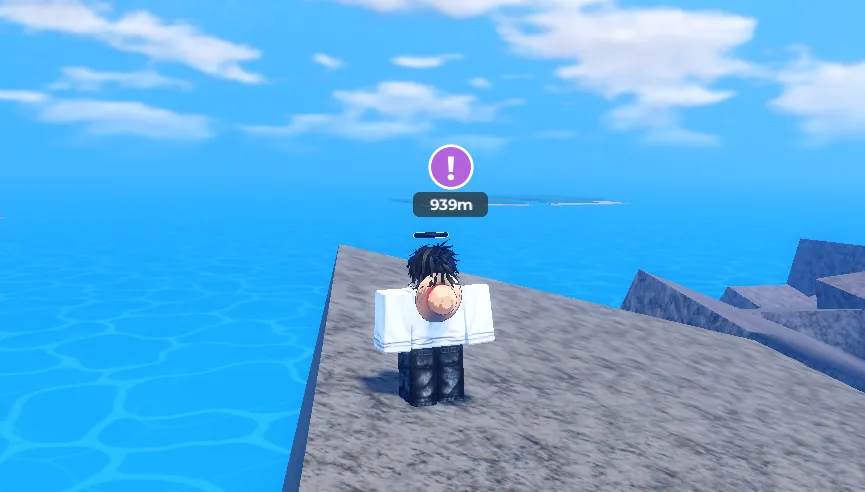
Quest Tracking gives you a mark on your screen to show which quest you should take on. It is a utility feature, but in practice it also helps hold the whole progression structure together.
When a game has many islands, trainers, quest NPCs, and unlock routes, navigation mistakes waste a lot of time. Quest Tracking reduces that friction directly.
Teleport Portal
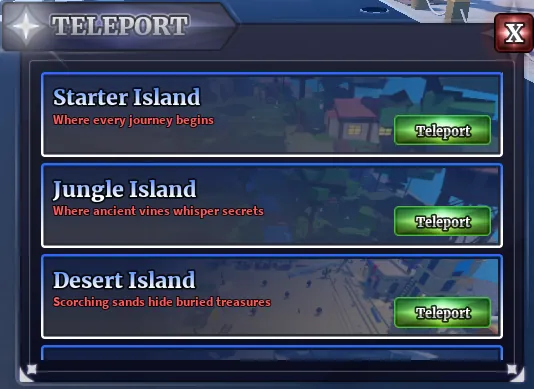
Teleport Portal is the game's travel feature for moving between islands more easily. It exists to make island travel much easier.
This matters because Sailor Piece progression is spread across many island hubs. Faster travel changes how practical it is to revisit trainers, farming spots, and older bosses.

Accessory Vanity
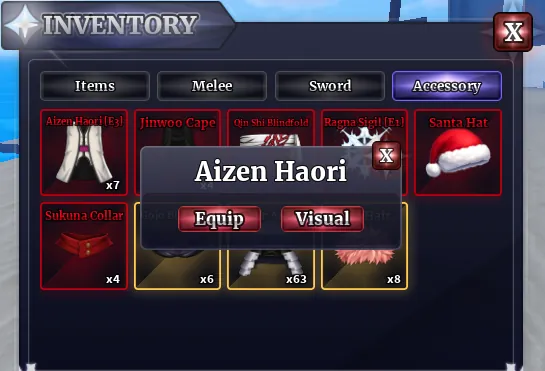
Accessory Vanity is the visual-loadout feature for using your favorite accessory or race look while keeping another accessory's buffs active.
| Field | Value |
|---|---|
| Main function | Keep one accessory's visuals while using another accessory's buffs |
| How to use it | Use the VISUAL button |
That means the system is not a separate grind track by itself, but it does affect how cosmetic and stat choices interact.
Ascend system
The Ascend system is accessed through the Ascensions NPC. It is a long-term progression system with cumulative account-level benefits.
| Field | Value |
|---|---|
| NPC | Ascensions NPC |
| Max total bonus reference | Ascend 8 |
| Luck | +40% |
| Money | +80% |
| Gems | +80% |
| CDR | +10% |
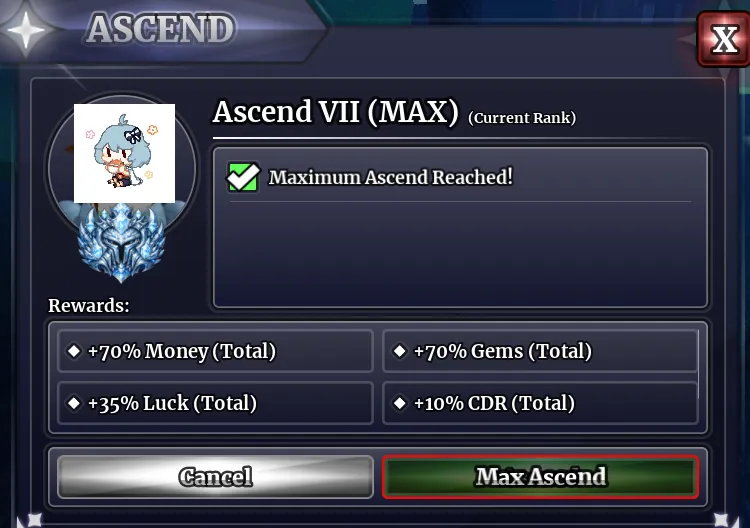
That makes Ascension one of the strongest long-term farming and efficiency systems in the game.
Skill Tree
The Skill Tree is accessed through the Skill Tree NPC. It has a clear unlock requirement and SP economy.
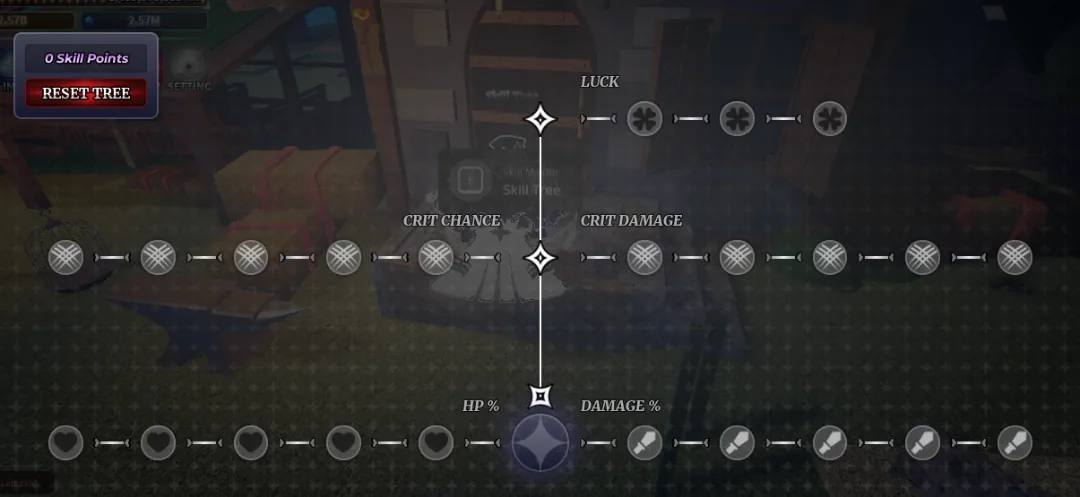
| Field | Value |
|---|---|
| NPC | Skill Tree NPC |
| Unlock requirement | level 7k and 1k gems |
| SP gain | 1 SP per 250 NPC kills |
| Upgrade line | Buff per level | Listed SP requirements |
|---|---|---|
| Damage | +5% | 3, 6, 10, 15, 25 |
| HP | +7.5% | 2, 5, 8, 13, 20 |
| Critical Chance | +1% | 3, 6, 10, 15, 25 |
| Critical Damage | +3% | 3, 6, 10, 15, 25 |
| Luck | +5% | 15, 25, 50 |
The Skill Tree is one of the cleanest late-game scaling systems because both the unlock gate and the SP economy are clearly defined.

How progression works
Sailor Piece progression is easier to read if you treat it as a loop:
- Move to the next island and take the matching quests.
- Clear mobs and bosses tied to your current stage.
- Use those rewards to unlock stronger combat options and progression systems.
- Return to older content when you need a specific item, boss drop, material, or system unlock.
That is why the wiki is being split into separate pages for islands, quests, mobs and bosses, swords, melee, dungeons, and the other supporting systems. The game is broad, but the progression loop itself is straightforward once those categories are separated cleanly.
What this wiki covers
- Island order and progression flow
- Important quest and utility NPCs
- Mobs, bosses, and the main drop paths
- Swords, melee styles, Devil Fruits, items, and accessories
- Races, traits, clans, runes, dungeons, titles, and auras
First page to read
The first page to read is Beginner Guide. It covers the controls, the basic progression loop, and the first priorities that matter before you worry about deeper optimization.